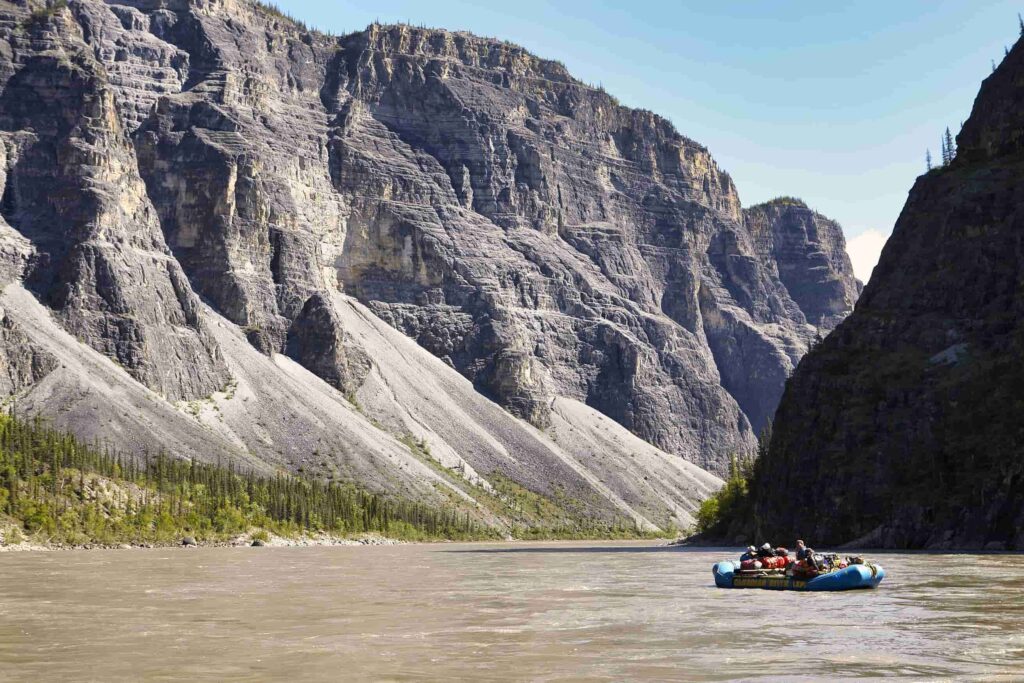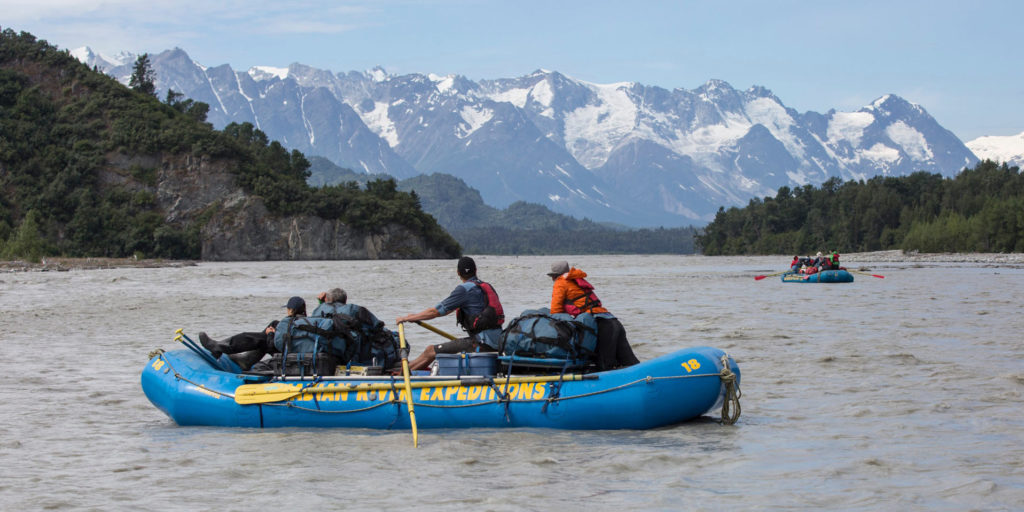

The Coppermine is a captivating river, enigmatic in its remoteness and history, which flows North through the Arctic tundra. The waterway has long been dreamed of and sought after by paddlers across Canada, renowned as an exquisite tundra expedition to undertake.
Expedition Planner Katy Ellis sat down with outfitting legend David Hibbard to talk about his experiences on the Coppermine and gain some insight into the mystery and magic held by this Canadian Heritage River.

“One of my clearest memories is of early one morning in camp while I was just sitting down to eat my breakfast. Suddenly there was a great commotion and one of our paddling party yelled for help down by the river bank. Of course I jumped up and rushed down – to find him wrestling with a huge Arctic char on his fly rod.
“They are incredible fish – the rainbow iridescence of their scales is captivating. By the time we had wrestled it onto land and I had returned to camp, my breakfast was long forgotten – but it was a sublime moment and one which highlights the intact ecosystems found in the Arctic.”
The Coppermine River is a dream destination for many anglers with its pristine waters and dramatic backdrop. Fishers can enjoy wetting their line for the chance to hook Arctic char – a salmonid famed for its resplendent colours and delicious taste – or one of the other Arctic specialties such as dolly varden, lake trout or grayling. One of the campsites below Bloody Falls is called “Onoagahiovik” in Inuinnaqtun, the regional dialect of Inuktitut, meaning “the place where you stay all night” – so named for the good fishing.
The rocky outcroppings and craggy cliffs bordering the river not only make spectacular landscapes to paddle through, but also excellent habitat for nesting raptors. Travellers can marvel at the healthy populations of golden eagles, rough legged hawks, gyrfalcons and peregrine falcons which swoop between the cliffs as you travel downstream. Gyrfalcons are the largest of the world’s falcons and exquisite hunters, swooping down on prey as large as hares in high speed dives – an ecstatic phenomenon for any observer lucky enough to witness it!

We are always hopeful to have the privilege of witnessing wildlife on the river. “It’s open country with hardly any trees, so it makes for excellent wildlife watching with the spotting scopes we have,” says Dave. “Our group once hid at the edge of some shrubs and observed a herd of musk ox – bulls, cows and calves. It was incredibly special.”
Musk ox are ice age relics who roam the tundra year round, surviving the frigid winter months by going into a state of standing torpor – temporary hibernation – to conserve energy and heat. They position themselves in rings during the coldest periods, placing the youngest calves at the centre to keep them warm enough to survive. You can read more about our fascination with musk ox here.
As herbivores, musk ox keep the floral diversity and ecosystem health of the tundra in check both through their grazing and through bioturbation (mixing up the soil with their hooves). More than 300 species of plants have been documented in the Kitikmeot region, including an abundance of spruces, sedges, grasses and willows. Barren ground caribou, moose, wolves, Arctic foxes, grizzly bears, wolverines and Arctic hares are just a few of the other iconic mammal species which share this ecosystem.

Dave continues, “Another time we set up our spotting scope near Bloody Falls and observed a sow grizzly with two cubs rolling in the grass together. At one point we thought they might wander right into our camp – but luckily they headed off in the other direction!”
Bloody Falls is the final set of rapids on the Coppermine River, just a stone’s throw from the Arctic Ocean. Archaeological evidence shows that the area has been inhabited since at least 1700 BC. In 1771, British explorer Samuel Hearne witnessed the massacre of a group of Kitlinermiut Inuit by Chipewyan Dene here, giving this landmark its turbulent name. He wrote an account in his journal which has since been published and joined by a wealth of literature written about the river.
Dave recommends Arctic Ordeal: The Journal of John Richardson, Surgeon-Naturalist with Franklin, 1820-1822 for an inspiring read to fuel the imagination for your Arctic adventure.

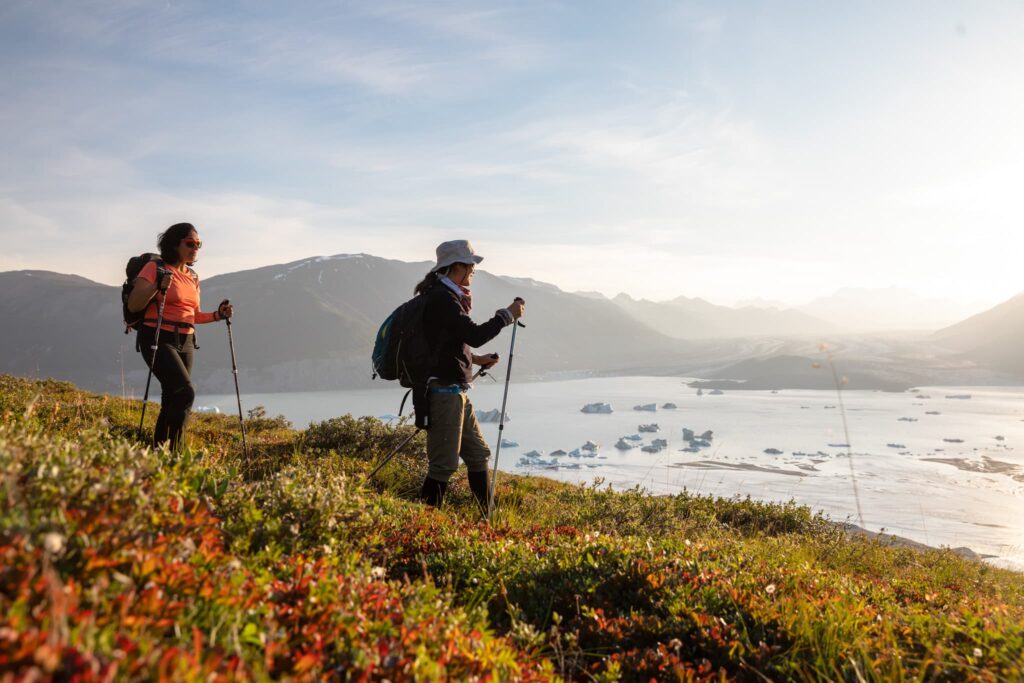
The Coppermine is loved by whitewater canoeists for its myriad rapids and whitewater sections, perfect for paddlers with intermediate experience. We begin our expeditions at Big Bend, allowing for a few days’ warm up on mellower water, before hitting the whitewater sections. Our itinerary is shorter in distance than other outfitters, allowing for more flexibility should the weather be unpredictable, or hiking in the enthralling peaks of the surrounding Copper and September Mountains.
Dave recalls one day at so-called Escape Rapids where a strong wind was blowing spray back from a waterfall tumbling down from the cliffs. “The spray was creating diamonds of sunshine in the sunlight,” says Dave. “It completely soaked us but it was magical!”
One of the highlights of the trip is finishing in the Inuit community of Qurluqtuq (Kugluktuk), meaning “place of flowing water” in Inuinnaqtun. A final night camped in Nunavut’s westernmost community offers guests the chance to appreciate the Inuit history and culture which have stood for more than three millennia.
It is a remarkable place to culminate and reflect on a once in a lifetime journey through the Arctic.

All photos credit to Andrew Murray.